C2PA & Content Credentials Explained
What C2PA is, how Content Credentials sign provenance into images and video, what exactly gets signed — and what the standard cannot prove.
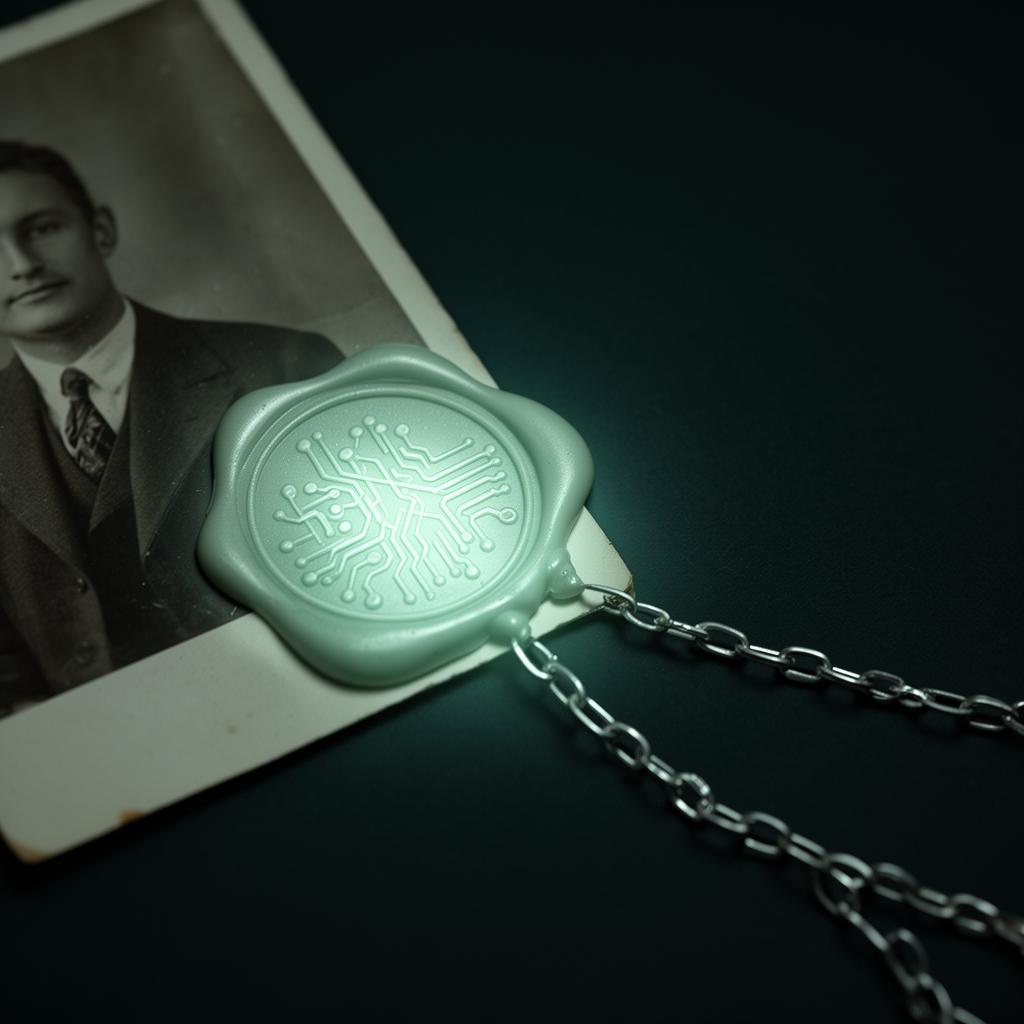
Content Credentials are the most consequential thing to happen to image authenticity since EXIF, and one of the most widely misunderstood standards on the open web. The press coverage tends to oscillate between "this finally solves deepfakes" and "this is trivially defeated by a screenshot." Both miss what the standard actually does.
This is the technical primer: what C2PA is, what a Content Credential cryptographically asserts, what survives common transformations, and where the gaps are.
C2PA, in one paragraph#
The Coalition for Content Provenance and Authenticity (C2PA) is a Joint Development Foundation project whose members include Adobe, Microsoft, Sony, Nikon, Leica, the BBC, OpenAI, and the New York Times. The output is a single open specification — currently version 2.1 — that defines how to attach a cryptographically signed manifest to a media file. The manifest describes the file's origin, the chain of edits performed on it, and the identity of the signer. "Content Credentials" is the user-facing brand name; C2PA is the underlying spec.
Anatomy of a Content Credential#
A C2PA manifest is a CBOR-encoded structure embedded in the file (in JUMBF for JPEG, in a metadata box for MP4, in an XMP block for PNG) and signed using COSE with X.509 certificates. Inside it, three things matter most:
Assertions#
Assertions are individual claims about the file. Standard ones include:
c2pa.actions— an ordered log of what was done to the file (c2pa.created,c2pa.placed,c2pa.color_adjustments,c2pa.cropped,c2pa.edited.AI)c2pa.hash.data— a cryptographic hash of the asset's binary content, so the manifest is bound to the specific bytesc2pa.thumbnail— a low-res preview of the file at signing timec2pa.training-mining— whether the rights holder permits the file to be used for ML training (a separate spec but commonly co-shipped)
Claim#
The claim aggregates all assertions and adds metadata: the producer, the timestamp, and a reference to the previous claim (forming the lineage chain).
Signature#
A COSE signature over the claim, produced with a certificate issued by a trusted authority. Without a valid signature from a recognized issuer, viewers display the credential as untrusted — present, but unverified.
What the chain actually proves#
A complete Content Credentials chain on a 2026 photo might look like:
- Camera-level claim. A Leica M11-P or Sony α1 II signs at capture time using a TPM-backed key. The assertion includes shutter time, focal length, GPS, and the device certificate. This binds the photo to a specific physical device at the moment of exposure.
- Editing claim. Lightroom signs after the user crops and adjusts color. The new claim references the camera claim as parent and adds a
c2pa.actionslog. - Distribution claim. A news organization signs after editorial review. The chain now has three links, each independently verifiable.
Anyone can validate the chain offline using the public certificates of the signers. If any byte of the file is altered without producing a new signed claim, the hash check fails and the entire chain is invalidated.
This is genuinely useful. It is also genuinely limited.
What Content Credentials do not prove#
The single most common misconception: a valid C2PA chain does not prove the photo depicts what it appears to depict. It proves:
- The signer claims to have produced this file
- The file has not been altered since the last signature
- The chain of custody is internally consistent
It does not prove the camera was where the GPS says it was. It does not prove the scene was real. A perfectly signed Content Credential can authenticate a perfectly staged photograph. The standard authenticates files, not truth.
A second limitation: the credential lives in metadata. Strip the metadata — by uploading to most social platforms, taking a screenshot, or running the file through a re-encoder that does not preserve sidecar data — and the credential is gone. The pixels carry nothing. Recovering provenance from pixels alone is the domain of watermarking (SynthID, DCT-domain watermarks) and forensics (PRNU, FFT analysis), not C2PA.
The AI-content provision#
Since version 1.4, the spec includes a dedicated assertion (c2pa.actions with action c2pa.edited.AI or c2pa.created with the digitalSourceType set to trainedAlgorithmicMedia) for AI-generated or AI-edited content. This is what OpenAI, Adobe Firefly, Google's Imagen, and Stability AI now embed by default.
The provision is a positive declaration, not a forensic detection. The model declares "this was produced by AI." It cannot enforce that declaration on bad actors who:
- Strip the metadata
- Re-encode the image through a tool that does not preserve manifests
- Generate the image with a model that simply chooses not to sign
- Sign with a self-issued certificate that no viewer trusts
In practice, the AI provision is most useful in the ecosystem of compliant publishers — newsrooms, stock photo agencies, ad networks — that contractually require signed C2PA chains. It is much less useful as a defense against adversarial actors.
What survives common transformations#
A practical reference for what happens to Content Credentials in the real world:
| Operation | Manifest survives? |
|---|---|
| JPEG re-save with EXIF preserved | Yes |
| Lightroom edit (C2PA-aware export) | Yes, with new claim appended |
| Photoshop "Save for Web" | Often no — strips JUMBF |
| Upload to Instagram | No — re-encoded, metadata stripped |
| Upload to LinkedIn | Partial — preserves XMP, may break JUMBF |
| Screenshot | No — new file, no parent reference |
| Open in default macOS Preview, no edits, save | Yes |
Run through ImageMagick -strip |
No |
| Pass through a CDN with image optimization | Usually no |
The pattern is clear: pipelines explicitly built for C2PA preserve credentials, and almost everything else destroys them. The web in 2026 is in transition — major platforms have announced support but not all have shipped.
What this means for image authenticity tooling#
Three takeaways for anyone building or relying on authenticity tooling:
- Treat C2PA as one signal among many. A valid chain is strong evidence of authentic provenance when present. Its absence proves nothing — most of the web's images will have stripped metadata for years to come.
- Combine credentials with forensic analysis. PRNU, FFT residuals, and noise statistics are independent of metadata and can corroborate or contradict a credential's claims. A complete authenticity verdict uses both.
- Do not over-claim. A C2PA badge in your UI saying "Verified" is misleading if the underlying chain only proves "the file has not been altered since this signer claimed they produced it." The user assumes you mean "this depicts a real event," and you do not.
The standard is real, the cryptography is sound, and adoption is accelerating. C2PA will become the dominant provenance signal for newsrooms, stock libraries, and AI vendors over the next 24 months. It will not, on its own, end the deepfake problem — and the people building it have always said as much.
For the forensic side of this same question — what you do when the metadata is gone and you have only pixels — see our deep dive on PRNU and FFT analysis.
If you are comparing a dedicated C2PA cleaner with a broader image-processing workflow, see our dated SynthGuard vs UnmadeWithAI comparison, including scope, privacy and current limitations.
Review method, sources and limits
- Reviewed by
- Tim Geithner · Founder and technical reviewer
- Last reviewed
- April 22, 2026
We compare current primary documentation with the implemented browser data flow and, where stated in the article, repeatable hands-on observations. A detector score is not proof of authorship or provenance. No controlled benchmark is claimed unless the article names its sample, tested version, date and method; third-party products and policies can change.
Primary references
SynthGuard.net — privacy-first tools
Humanize AI media locally and choose a clearly disclosed text mode.
Images, video and detector scans stay on your device. Light-mode text is local; deeper text modes use the protected inference route. No detector outcome is guaranteed.
All third-party names, logos and trademarks (e.g. Hive, Optic, Sensity, Sightengine, Illuminarty, GPTZero, Instagram, TikTok, OnlyFans, Fanvue, SynthID, C2PA) are the property of their respective owners. SynthGuard is an independent service and is not affiliated with, endorsed by, sponsored by, or partnered with any of these companies or platforms. Detector and platform names are used solely for descriptive comparison under § 6 UWG / Art. 4 Directive 2006/114/EC.
Frequently asked questions
Glossary terms in this article
Keep reading
What Is SynthID & Can It Be Removed?
Most people picture a watermark as something you can see, or at worst something written into a file's metadata. SynthID is neither. It is a signal baked into the content itself at the moment of gener…
How AI Image Detectors Actually Work
AI image detectors look magical from the outside — drop an image, get a percentage, ship the verdict. Inside, they are an assembly of brittle statistical signals stacked on top of each other, each ca…
PRNU, FFT & Sensor Noise Explained
Image forensics is a small, mathematically dense field that quietly underpins everything from courtroom exhibits to AI detection startups. Three pillars do most of the heavy lifting: PRNU (the sensor…