Do Employers Detect AI Cover Letters?
Do recruiters run AI detectors on applications? What ATS systems really check, the tells hiring managers notice, and how to use AI without sounding like it.
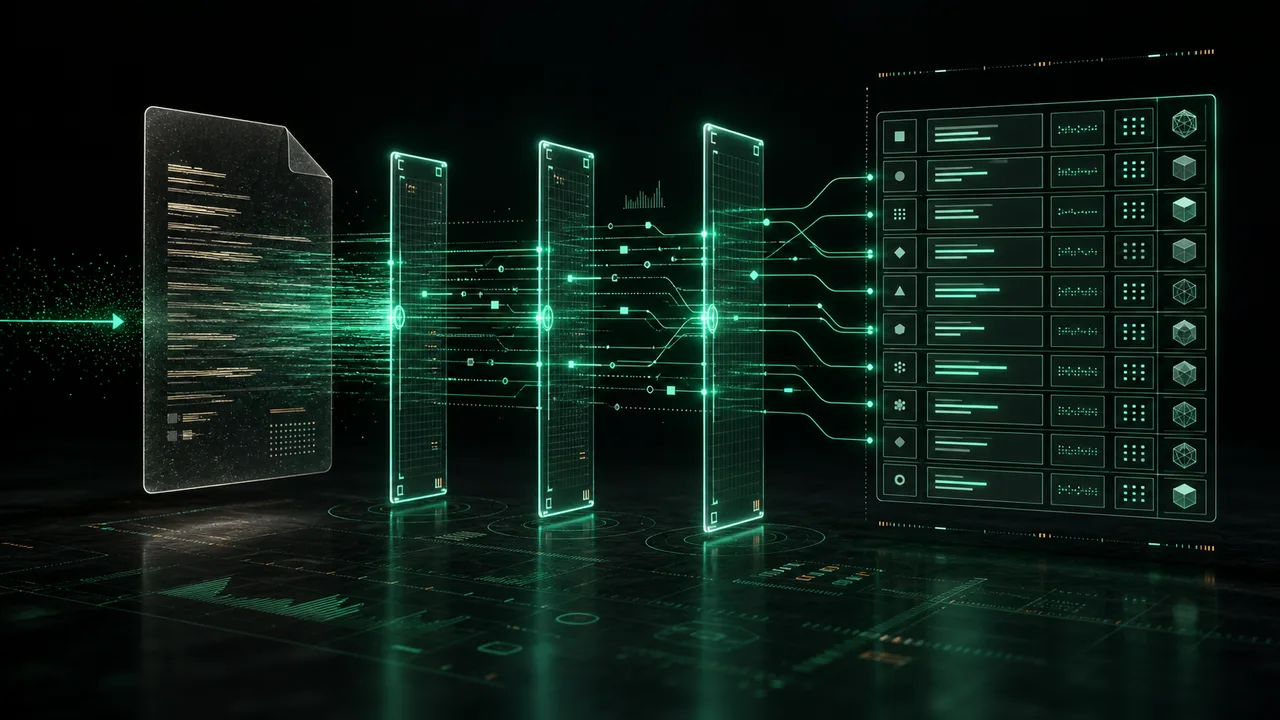
Almost everyone uses AI somewhere in a job application now, and almost everyone is quietly worried about being caught. The worry is aimed at the wrong threat. The thing that costs candidates interviews is rarely a detector score in a screening tool. It is a human being reading three hundred words that could have been sent to any company on earth.
Here is what actually happens to your application, in order.
What an applicant tracking system really does#
The first system to read your resume is an ATS, and it is worth being precise about what those are for: parsing and matching. Extract structured fields — titles, dates, employers, skills, education — normalize them, and score the result against the requisition. That is the whole core job, and it long predates generative AI.
Some vendors have bolted on AI-likelihood indicators. Treat those with the same scepticism as every other detector, for a specific structural reason: resumes are the worst possible input for authorship analysis. They are short, heavily formatted, fragmentary, and written to a genre convention that is inherently formulaic. Detectors score predictability and sentence variation — and a bullet list of achievements is predictable and uniform by design, whoever wrote it.
Cover letters are longer prose and therefore more analysable, but they suffer the same problem in milder form: the genre is conventional. Everyone opens the same way. That makes the baseline unusually machine-like even for entirely human letters.
The tells a human notices in four seconds#
This is the real filter, and it does not need software.
Generic praise with no object. "I have long admired your company's innovative approach and commitment to excellence." A reader has seen this sentence two hundred times. It carries zero information, and it signals that you did not look the company up.
Specificity that is almost right. A model asked to write about a company it does not know produces plausible-sounding but slightly wrong claims — the wrong market, an outdated product line, a mission statement that is nearly the real one. This is worse than saying nothing, because it is checkable.
Flat rhythm. Every sentence lands at roughly the same length. Human writing swings — a long, qualified thought, then a short one. That variation, burstiness, is the property detectors measure, and readers feel it even without a name for it.
The stock vocabulary. Delve, leverage, tapestry, testament, navigate the landscape, in today's fast-paced world, it is not just X, it is Y. Not because these words are forbidden, but because their density in generated text is far higher than in ordinary writing. We catalogued the pattern in AI words and phrases that give you away.
A mismatch with the interview. The most damaging version arrives later: an eloquent, polished letter followed by a candidate who cannot discuss anything in it. That gap is remembered.
Triplets everywhere. Generated prose loves lists of three, symmetric clauses, and tidy parallel structure. One is fine. Six paragraphs of it reads as machine cadence.
What employers actually mind#
Worth separating, because candidates conflate them.
Most employers do not mind that you used a tool to draft or polish. That is the same category as a template, a proofreader, or a friend who is good at writing. Surveys of hiring managers consistently find that using AI as an aid is broadly accepted; some organizations say so explicitly in their application instructions.
What they do mind: factual misrepresentation — invented employers, inflated titles, credentials you do not hold, and, increasingly, fabricated project details a model confabulated into your draft. Also AI use in an assessment where it was prohibited, such as a take-home exercise with explicit rules, and evidence the application was mass-produced, which is a signal about your interest rather than your writing.
The workflow that actually performs better#
The goal is not to hide AI use. It is to submit something a machine could not have written, because it contains things only you know.
1. Do the research first, by hand. Read the job posting properly, the company's recent announcements, the product, the team page. Take notes. This step is where the material comes from, and skipping it is the actual reason applications sound generic.
2. Draft the structure with AI if you like. Getting from a blank page to an ordered argument is a legitimate use of the tool, and it is the part where models genuinely help.
3. Delete every sentence that could appear in anyone else's letter. This alone cuts most generated cover letters in half — and the half that remains is the half that works.
4. Replace claims with evidence. Not "I improved processes" but "I rewrote the returns workflow and cut average handling time from nine minutes to four." Numbers, product names, tools, what broke, what you did about it. Models cannot invent your specifics, which is exactly why specifics read as human.
5. Break the rhythm. Vary sentence length deliberately. Let one run long. Cut another to four words. Use a contraction. Start a sentence with "And" if that is how you talk.
6. Read it aloud. The single most effective test available. Anything you would not say to a person in a room does not belong in a letter to one.
Where a humanizer fits#
If you write in a second language, or your natural register is very formal, your own writing may read as machine-like to both detectors and readers — the false-positive problem is well documented and it lands hardest on non-native English writers. Reworking cadence and phrasing by hand in a language you are still mastering is genuinely difficult, and that is a real, legitimate use case.
Our Text Humanizer works on exactly the properties that make text read as generated: sentence-length variation, phrasing predictability, over-uniform structure. It runs in your browser and does not change what your text claims — which matters here, because on a job application the facts must stay yours. The method is explained in how to humanize AI text and how to make ChatGPT sound human.
What it cannot do is add substance. A generic letter that has been stylistically varied is still a generic letter, and no rewriting tool substitutes for the twenty minutes of research in step one.
The realistic summary#
Detector scores on job applications are noisy, uncommon and rarely decisive. The genre is short, formulaic and full of false positives, and most recruiters are not running forensics — they are reading fast and looking for a reason to keep going.
So optimize for the reader, not the classifier. An application containing specific, verifiable, personal detail passes both tests automatically, because the thing that makes text unmistakably human is not its rhythm. It is that it could only have been written by one person about one job.
Review method, sources and limits
- Reviewed by
- Tim Geithner · Founder and technical reviewer
- Last reviewed
- August 1, 2026
We compare current primary documentation with the implemented browser data flow and, where stated in the article, repeatable hands-on observations. A detector score is not proof of authorship or provenance. No controlled benchmark is claimed unless the article names its sample, tested version, date and method; third-party products and policies can change.
Primary references
SynthGuard.net — privacy-first tools
Humanize AI media locally and choose a clearly disclosed text mode.
Images, video and detector scans stay on your device. Light-mode text is local; deeper text modes use the protected inference route. No detector outcome is guaranteed.
All third-party names, logos and trademarks (e.g. Hive, Optic, Sensity, Sightengine, Illuminarty, GPTZero, Instagram, TikTok, OnlyFans, Fanvue, SynthID, C2PA) are the property of their respective owners. SynthGuard is an independent service and is not affiliated with, endorsed by, sponsored by, or partnered with any of these companies or platforms. Detector and platform names are used solely for descriptive comparison under § 6 UWG / Art. 4 Directive 2006/114/EC.
Frequently asked questions
Keep reading
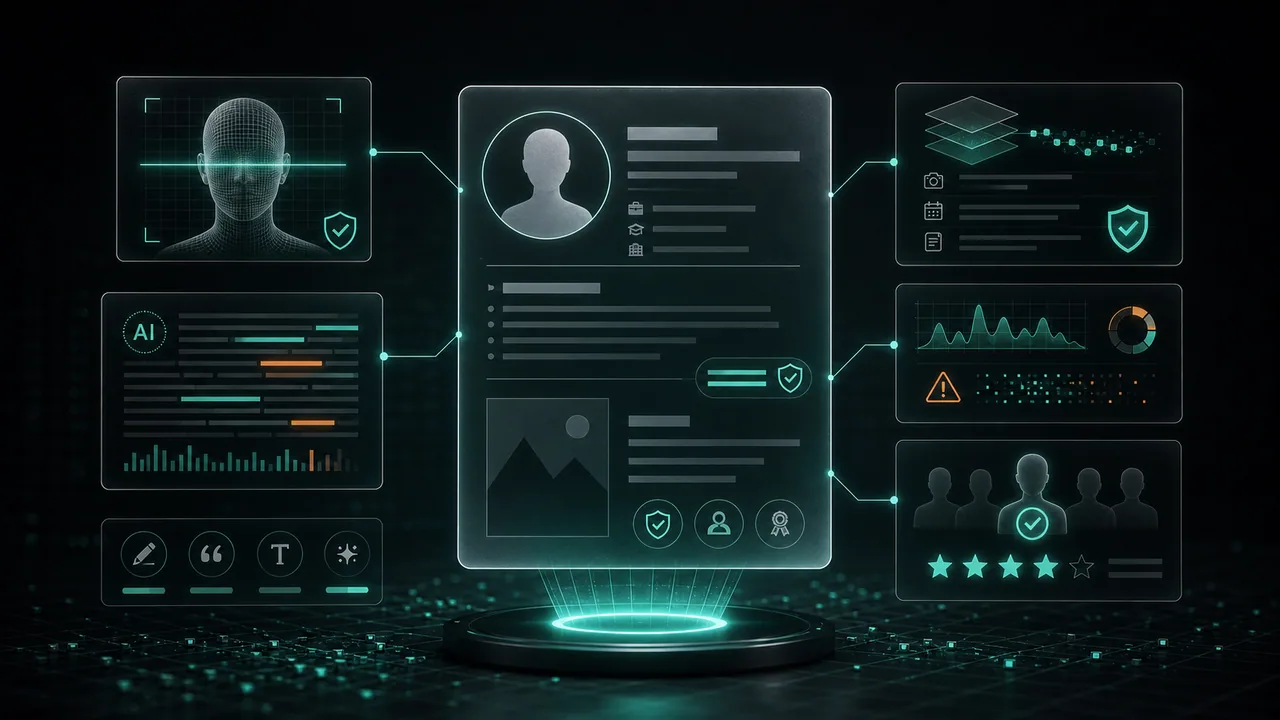
Does LinkedIn Detect AI-Generated Content?
Short answer: LinkedIn does not, as of 2026, run a public per photo detector that scans your headshot and bans you for being AI generated, and it does not publicly penalize AI written posts as a cate…
AI Words & Phrases That Give You Away
Once you've read enough ChatGPT output, you start to see the seams. Certain words appear far more often than they should. Certain phrases show up in article after article. The punctuation has a parti…
How to Humanize AI Text (2026 Guide)
If you have ever pasted a paragraph from ChatGPT into a document and felt that it reads fine but somehow not like you, you have already noticed the thing this guide is about. AI writing has a texture…