Winston AI Detection: How It Works
A practical guide to Winston AI — how its AI detection scores text, where it's used, how reliable it is, and why its confidence score isn't a verdict.
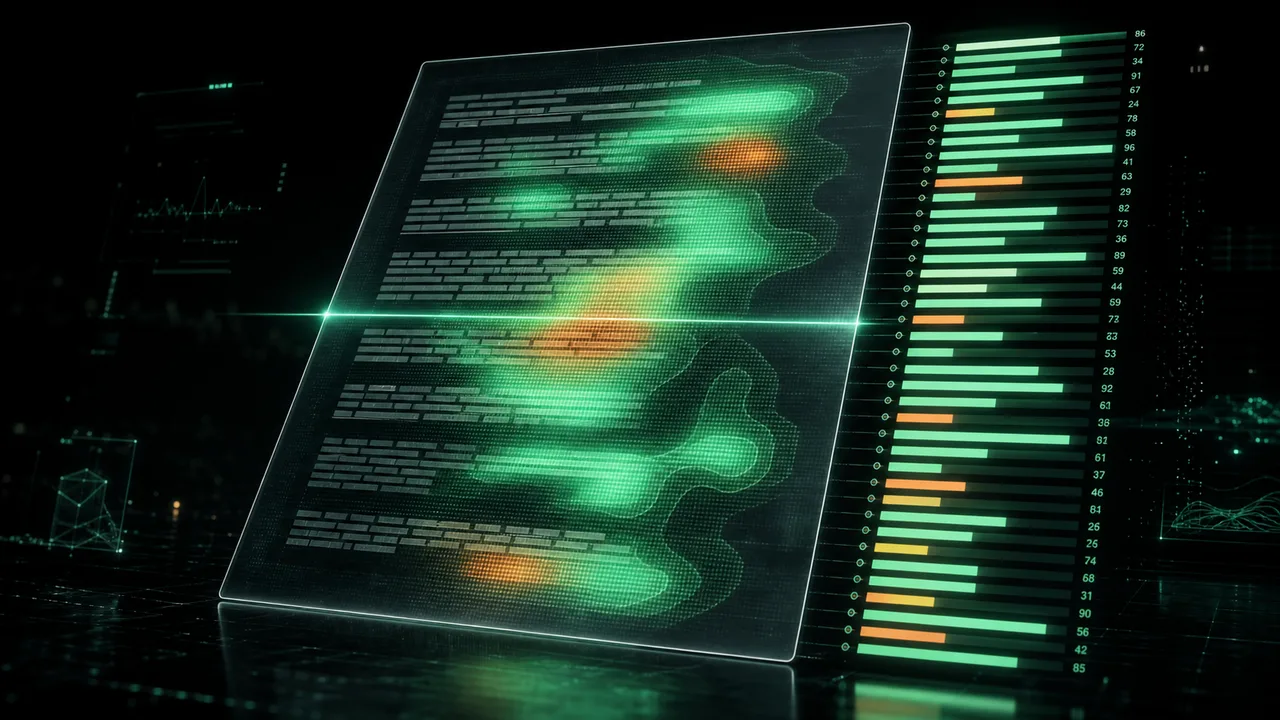
Winston AI markets itself as a professional-grade AI detector, aimed less at students checking a single essay and more at publishers, agencies, and educators running content at scale. It bundles AI detection with plagiarism checking and readability scoring, and it's become a common choice in SEO and publishing workflows. This guide explains how its detection actually works, where it's reliable, and why — like every detector — its confident-looking score is an estimate rather than a verdict.
How Winston AI scores text#
Underneath the professional packaging, Winston AI is doing the same fundamental thing as every other AI text detector: estimating how closely your writing matches the statistical profile of machine-generated text. It is a trained classifier, not a database match.
The signals are the ones common to the whole field:
- Perplexity — the predictability of word choices. Low perplexity leans AI.
- Burstiness — the variance in sentence length and structure. Low burstiness leans AI.
- Additional stylometric features layered on top, which commercial tools use to sharpen the boundary.
Winston reports a score — typically framed as a "human score" or a percentage likelihood — plus a sentence-level breakdown highlighting which passages look machine-written. The breakdown is genuinely useful for spotting which parts of a mixed document triggered the flag, but it's important to read it as the model's opinion, not a measurement.
Where Winston is used#
Winston's positioning explains its popularity more than any detection breakthrough does. It targets three audiences:
- Publishers and editorial teams, who want to screen submissions and freelancer work.
- SEO agencies, who produce content at volume and want a QA gate before publishing.
- Educators, as an alternative to Turnitin with its own plagiarism and readability features.
The team dashboards, bulk scanning, and combined plagiarism-plus-AI reporting are what sell it. The underlying detection is subject to the same limits as everything else in the category.
How reliable is it?#
Winston advertises high accuracy figures, and on clean, unedited AI text it does perform competitively among commercial detectors. But a single headline accuracy number hides how much the result depends on the input.
Three input categories, three very different outcomes:
- Unedited AI text: relatively reliable detection.
- Edited or humanized text: detection drops, because editing pushes perplexity and burstiness toward human ranges.
- Genuine human text: mostly correct, but with a real false-positive rate — and false positives are the errors that do actual harm.
The false-positive problem deserves emphasis in a professional context. If an agency uses a Winston flag to reject a freelancer's genuine work, or an educator treats a score as proof, a wrong number has real consequences for a real person. Winston's own guidance, like Turnitin's, points toward human review rather than automated judgment.
What the score doesn't tell you#
The most common mistake is treating Winston's percentage as portable truth. It isn't. The score is one classifier's confidence, and it isn't comparable to ZeroGPT's or GPTZero's numbers. Run the same text through several tools and you'll routinely get conflicting verdicts, because each is a different model with a different decision boundary.
So a Winston result answers exactly one question: does this text look human-written to Winston's specific model right now? It does not answer "was this written by AI," and it never provides proof.
If Winston flags your content#
Two situations, two responses.
If it's flagging your own honest writing, that's a false positive, and it's common with clear or formulaic prose. Keep drafts and version history; that evidence is what survives a dispute, not an argument about the percentage.
If it's flagging AI-assisted content you're preparing to publish, the productive move isn't to chase a specific Winston number — another tool will score it differently anyway. It's to actually improve the writing: vary the rhythm, remove the AI tells, and add genuine substance. A humanizer handles the mechanical part by raising burstiness and perplexity, and SynthGuard's runs its Light mode locally in your browser with a live burstiness reading.
As always, moving the signals shifts the odds but guarantees nothing — Winston is retrained like every other detector, and no tool can promise a permanent pass. The full humanizing guide covers the approach that actually holds up.
The bottom line#
Winston AI is a capable, professionally-packaged detector whose real edge is workflow features — team dashboards, plagiarism integration, bulk scanning — not a fundamentally different detection method. It scores the same perplexity and burstiness signals as its competitors, with the same input-dependent accuracy and the same false-positive risk. Treat its human score as one informed guess from one model, useful for triage and useless as proof.
Review method, sources and limits
- Reviewed by
- Tim Geithner · Founder and technical reviewer
- Last reviewed
- July 23, 2026
We compare current primary documentation with the implemented browser data flow and, where stated in the article, repeatable hands-on observations. A detector score is not proof of authorship or provenance. No controlled benchmark is claimed unless the article names its sample, tested version, date and method; third-party products and policies can change.
Primary references
SynthGuard.net — privacy-first tools
Humanize AI media locally and choose a clearly disclosed text mode.
Images, video and detector scans stay on your device. Light-mode text is local; deeper text modes use the protected inference route. No detector outcome is guaranteed.
All third-party names, logos and trademarks (e.g. Hive, Optic, Sensity, Sightengine, Illuminarty, GPTZero, Instagram, TikTok, OnlyFans, Fanvue, SynthID, C2PA) are the property of their respective owners. SynthGuard is an independent service and is not affiliated with, endorsed by, sponsored by, or partnered with any of these companies or platforms. Detector and platform names are used solely for descriptive comparison under § 6 UWG / Art. 4 Directive 2006/114/EC.
Frequently asked questions
Glossary terms in this article
Keep reading
Falsely Accused of Using AI? What to Do
You wrote it yourself. A tool says you did not. That is a uniquely infuriating situation, and the instinct it produces — a long, emotional email defending your integrity — is almost always the wrong…

Does ZeroGPT Actually Work? An Honest Look
ZeroGPT is one of the first AI detectors most people try, largely because it's free and takes about ten seconds to use. Paste text, get a percentage, done. But a fast, free tool that outputs a confid…
Why AI Text Detectors Disagree (2026)
AI text detectors are everywhere — in classrooms, in publishing workflows, in HR screening. They are also, frequently, wrong. The same paragraph submitted to GPTZero, Originality.ai, and Turnitin wil…